

It’s easy to think of the digital world as an exact copy of reality, especially when all we use are phones, listen to music, play games, and communicate through digital objects. This feels so natural, precise, and reliable to us. But in reality, digital systems are not perfect copies at all. They are translations of the natural world, which are designed to simplify complicated information so that both humans and machines can process and understand it more easily. The digital revolution didn’t just improve technology, it changed how we interpret and interact with reality itself.
At its core, digital systems work by turning continuous information into fixed values. This idea existed long before modern computers came into play. I’ve used this example quite a bit but systems like Morse code reduced language into dots and dashes, which showed that communication could be broken down into more simple and discrete signals. Another clear example can be seen in digital images. Instead of capturing every detail of the real world, images are broken down into tiny units called pixels, each representing a fixed color value. While this allows images to be shared and stored more efficiently, it also means that the digital version is a simplified representation rather than a perfect copy of reality.
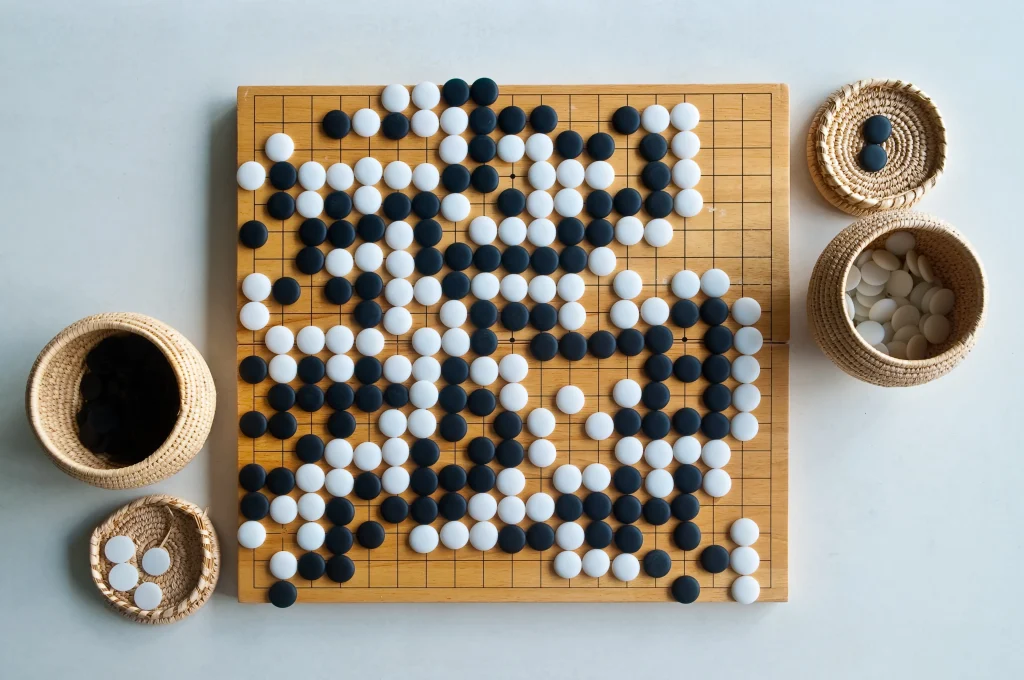
This tradeoff becomes more noticeable when we start looking at how different systems respond to digitization. Games like chess and go provide a clear example of this. Chess, with its more limited set of possible moves, can be calculated and predicted by computers with high accuracy. As a result of this, digital systems have basically mastered the game, which often outperforms human players. Go, on the other hand involves a much larger number of possible moves and outcomes, this makes it a lot more complex. Even with sophisticated computer processes, predicting every possible outcome is much more difficult. This difference shows that while digital systems excel in structured environments, they struggle with systems that have high levels of uncertainty and complexity.

Approaching this from multiple disciplines allows for a more versatile understanding. From a technological standpoint, digitization is about efficiency, and precision. But from a human perspective, especially in areas of psychology, communication, and forensic science, it introduces new challenges. For example, digital forensic tool like fingerprint databases and DNA analysis systems can process evidence quickly and accurately. However, they still depend on human interpretation. There is no universal standard for how many matching points to confirm a fingerprint, meaning personal judgement still plays a role. This highlights an important idea, digital systems may appear objective, but they are still shaped by human decisions.
Because of this, I argue that the digital revolution has been extremely beneficial, but not without its drawbacks. Digital systems allow us to communicate immediately, while storing large amount of information, and analyze data in ways we couldn’t before. At the same time, it simplifies reality, and sometimes creates a false sense of completeness. The comparison between chess and go reflects this perfectly because it shows systems can be fully controlled and predicted, while other cannot be easily reduced to data.
In the end, the digital world should not be seen as a replacement for reality, but as a tool for understanding it. It is designed to simplify complex information so that both humans and machines can process and understand it more easily. Recognizing both the strengths and limitations of digital systems is what allows us to use them effectively without losing sight of the complexity of the real world.