
As technology has evolved, digital systems have become the main way we represent and communicate information. Digital technology makes our lives easier in many ways, but it also changes how we experience the world. While digital systems improve clarity and reliability, they also simplify reality, requiring us to sacrifice some detail for efficiency. One of the best strengths of digital systems is their ability to reduce noise. In analog systems, signals are continuous and easily distorted by interference, which often results in static or poor image quality in older television broadcasts. Digital systems use fixed values like 1s and 0s, which allow the intended signal to be recognized even if some distortion occurs. Even if part of the signal is disrupted, the system can still recognize and reconstruct the original information. If the system cannot interpret the signal, it will produce no sound until it can correctly recognize the fixed. This is why modern digital television and audio sound much clearer than older analog systems.
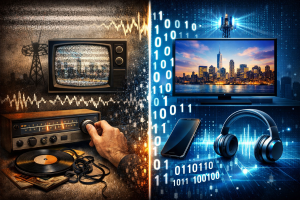
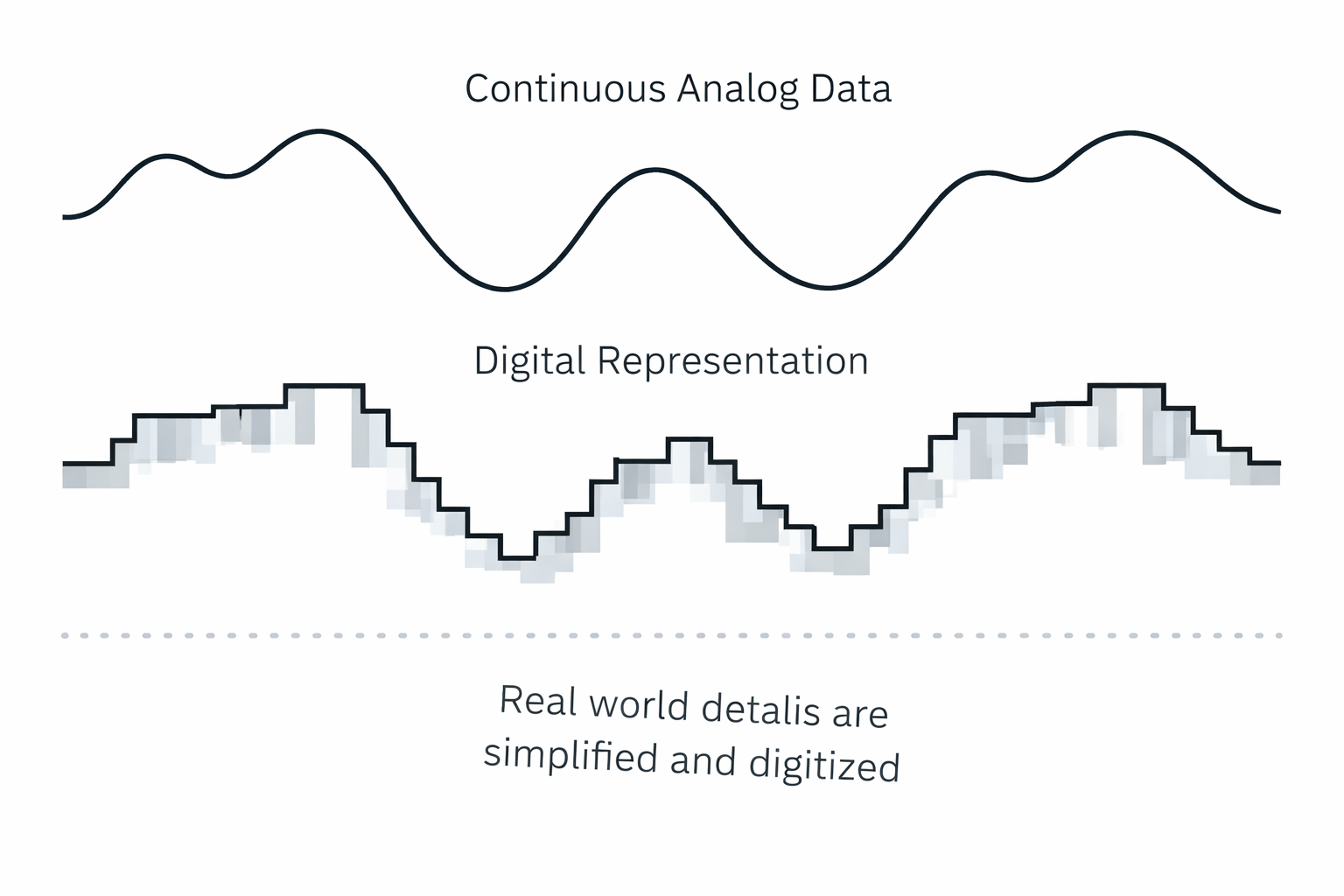
However, this clarity comes at a cost. The real world is not made of clean, perfect values. They are continuous and constantly changing. Digital systems must break this complexity into smaller pieces in order to process it. This means that every digital representation, in some way, is incomplete, because it can only capture selected snapshots or estimations of reality rather than full and continuous details. As a result, there can be subtle variations like slight changes in tone, texture, or timing. These may be lost or simplified during the conversion process. While these differences are often small enough that we do not notice them in everyday use, they showcase an important limitation. Digital systems prioritize efficiency and clarity over perfectly capturing all the detail of the real world.
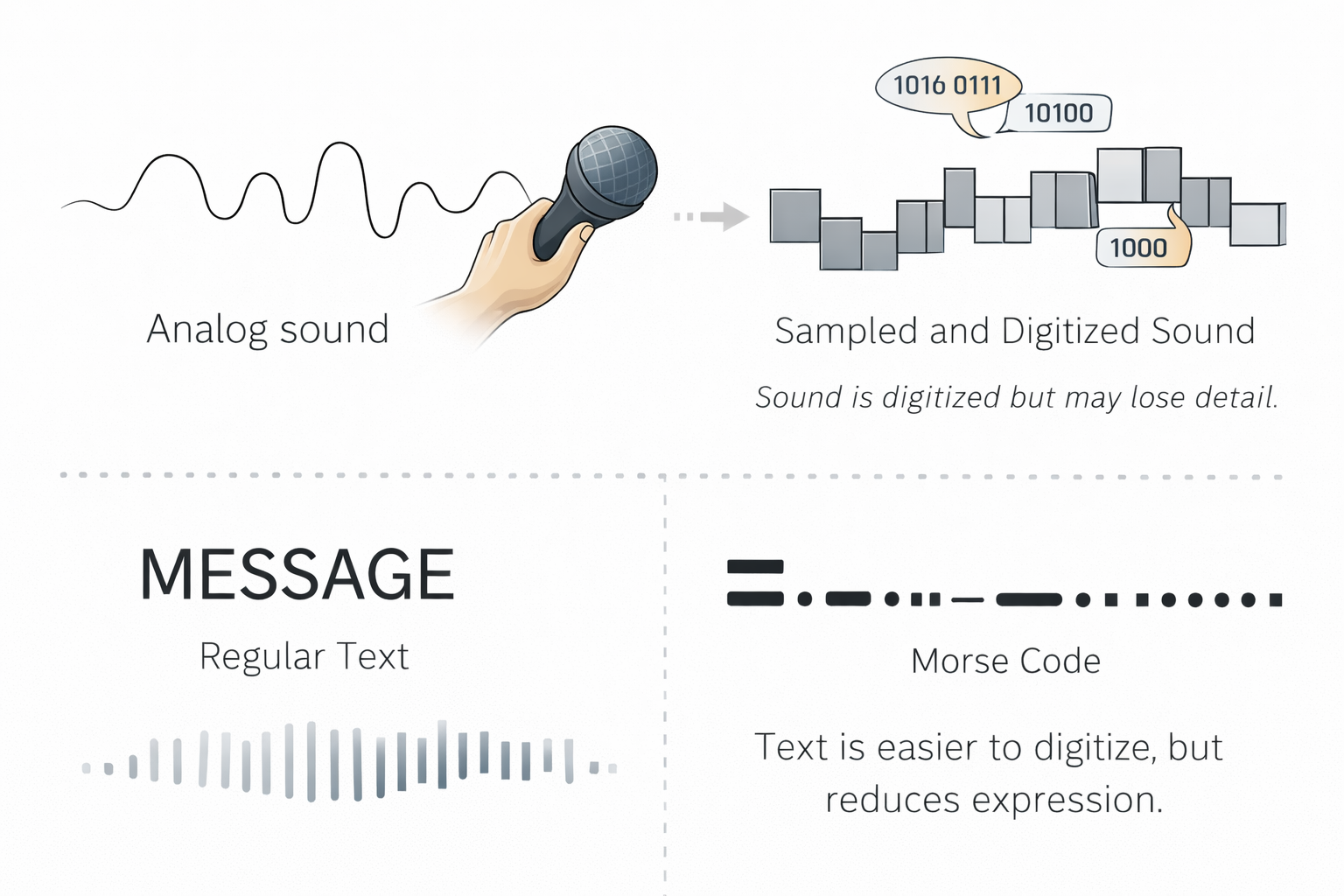
This becomes especially clear in the process of digitization. Sound, for example, begins as continuous waves. These waves are sampled at specific intervals and converted into numerical values that can be stored and transmitted. Humans can hear frequencies between about 20 and 20,000 vibrations per second, and digital systems must decide how much of that range to capture. If the sampling rate is too high or low, then important details may be lost. While digitization makes sound easier to store, copy, and share it also means that the digital version may not fully represent the original. Text is easier to digitize because it is already based on fixed symbols. Systems like Morse code take this even further by reducing language into simple patterns of dots and dashes to create words and sentences. While this makes communication faster and more efficient, it can also remove some of the power of human expression.
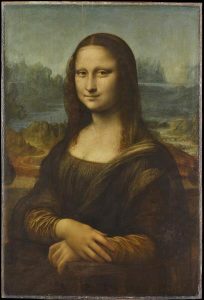
Art provides one of the clearest examples of this tradeoff. The Mona Lisa by Leonardo da Vinci (1503) has changed over time due to aging, environmental effects, and overcleaning. We can never fully recover its original appearance. In contrast, digital images can be copied perfectly, but lack the depth and uniqueness of the original work. In the end, digital systems do not replicate our reality, yet they reinterpret it. They give us convenience, speed, and clarity, but also remind us that not everything in the real world can be perfectly captured.
AI Prompts: Chatgpt
-“help me create images based on this text”
-“spell check and look for grammar error”