
When we think of the digital world, we usually picture modern technology like our computers, smart phones, and tv’s; however, digital elements have always existed, and they have become much more abundant over time. The word digital simply means systems with a fixed number of possibilities, like the alphabet which has reflected digital principles for a long time. Today’s digital society has been shaped by changing social needs, human creativity, and innovations that have changed how we communicate and understand information.
.
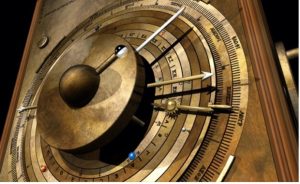
One of the early examples of calculation is the Antikythera mechanism, an ancient device used to track astronomical events. This mechanism was entirely analog, meaning it operated through continuous motion and had an infinite number of possible positions. Unlike modern computers it did not rely depend on discrete values or binary systems. This showcases how early humans’ problem solved using physical and mechanical systems.
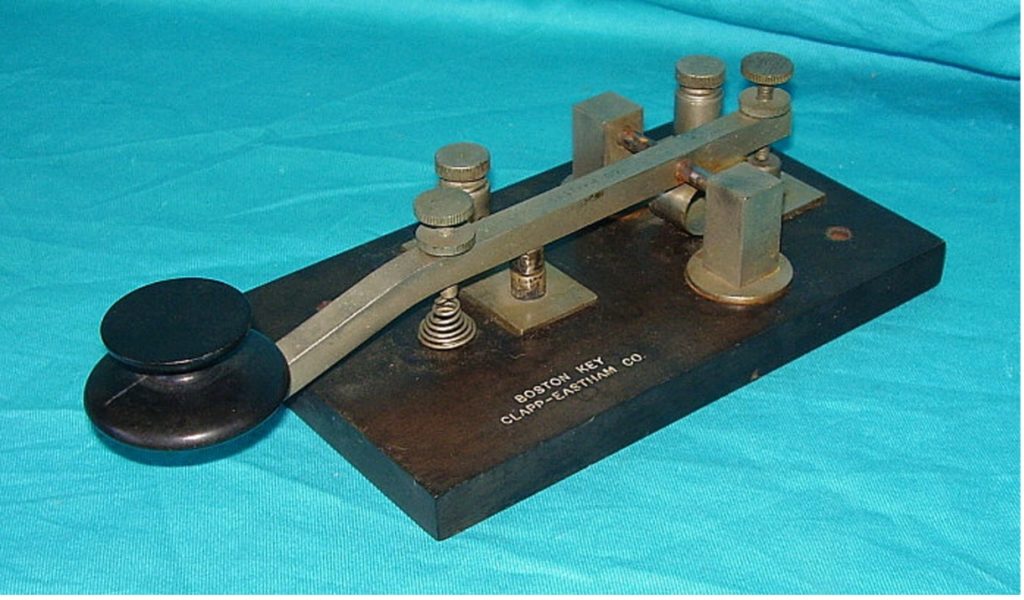
As society has evolved, the need for communication increased. Before electrical communication, sending a message across the world could take weeks. The invention of the telegraph by Samuel Morse in the 1830s transformed this process. Originally a painter, Morse moved his focus to developing a form a rapid communication after receiving a letter informing him of his wife’s death days after it occurred. This devastation motivated his obsession with creating a faster way to send messages. Instead of sending papers with letters, words and communication could now occur through electrical pulses. Morse code transformed language into a system of dots and dashes, which represented a major step toward digital communication. This movement shows how societies demands like faster communication during times of conflict and needs drove technological revolution. Because it uses simple, discrete signals like dots, dashes, and pauses, morse code is less affected by noise and interference. This is because dots, dashes, and pauses can’t be easily confused making a clear and distinct signal which makes it a form of digital communication rather than analog.
The shift from analog to digital became even more apparent with the development of modern communication systems. Early TV’s and telephones were analog, meaning they transmitted continuous signals that were easily affected by noise and interferences. Digital systems reduce noise by using a simple yes or no decision instead of trying to read values. The signal us treated as 1s and 0s, so small distortions don’t matter if the signal is above or below the set levels. Unlike analog systems, which amplify both signal and the noise, digital systems can clean up the signal. Over time these systems were transformed into a digital technology that uses binary 1’s and 0’s. These digital are more resistant to noise because it relies on the fixed value of 1 and 0 which allows for a sharper image, clearer sound, and a more reliable form of communication. At a basic level, digital means showing information using a set number of values. Everything like videos, text message, and the internet is broken down into a combination of 1’s and 0’s. A good way to understand this is thinking about the alphabet. The alphabet is digital because it consists of a fixed number of letters that be put together in different ways to create meaning. Whereas the real world is anomaly because it is continuous and contains infinite variation.
Classifying objects as analog or digital helps clarify this difference. For example, a painting like The Night Watch by Rembrandt is analog because it contains an infinite range of colors. It has changed over time due to aging and environmental factors. If the colors from the painting were taken straight from the tube it could be considered digital because the colors are consistent out of the tube which means that it could possibly be remade. Another example is sheet music, this is digital because it uses fixed symbols to represent notes, the performance of that music then becomes analog through sound waves and interpretation. In the same way, early cellphones relied on analog signals, whereas today’s phone’s function using digital systems that allow for texting, video streaming, and access to the internet.
Understanding the difference between analog and digital systems reveals how humans have adapted technology to meet our needs better. Digital systems have simplified the complexity of the real world and turned it into manageable, discrete pieces of information, which makes communication faster, clearer, and more efficient. This reflects a deeper idea that the digital world is not natural, it is a human created system designed to represent our reality in a structured way. From ancient mechanical devices to modern AI, the evolution of digital technology showcases the power of human innovation. By looking at these systems and how they work/where they came from, we may gain a better understanding of the digital world be rely on every day.
AI Prompts: ChatGPT, Grammarly
-“Help me write a title”
-“Spell check and find grammatical errors”